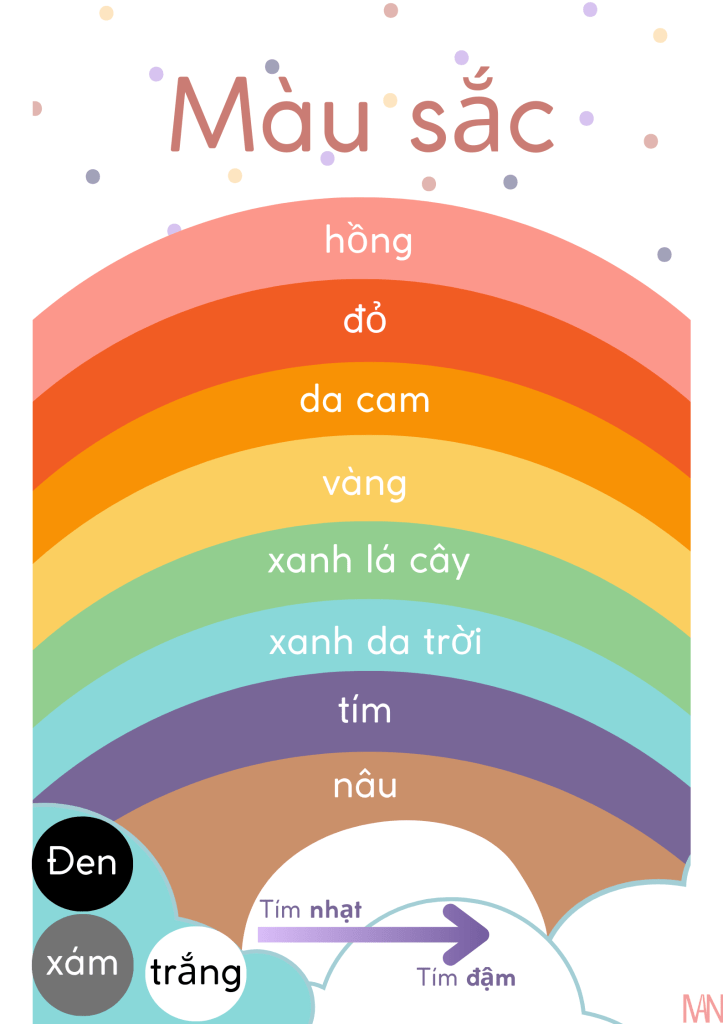
Colors in Vietnamese starts with the classifier “màu” which means “color”
Màu sắc – Colors
Màu đỏ – the color red
Màu đen – the color black
Màu hồng – the color pink
Màu trắng – the color white
Màu xanh – green/ blue
In Vietnamese, “màu xanh” is a general term that can refer to both blue and green, so more specific words are used to distinguish between different shades.
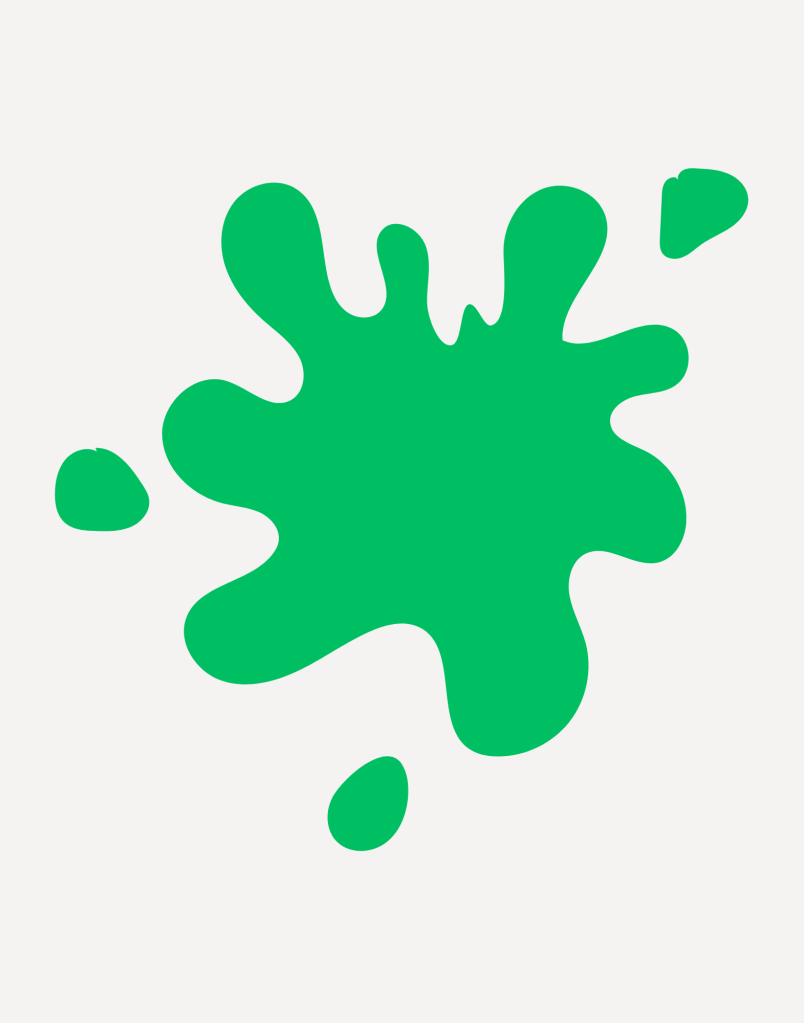
Màu xanh lá cây – green (literally “green like the leaves on trees”)
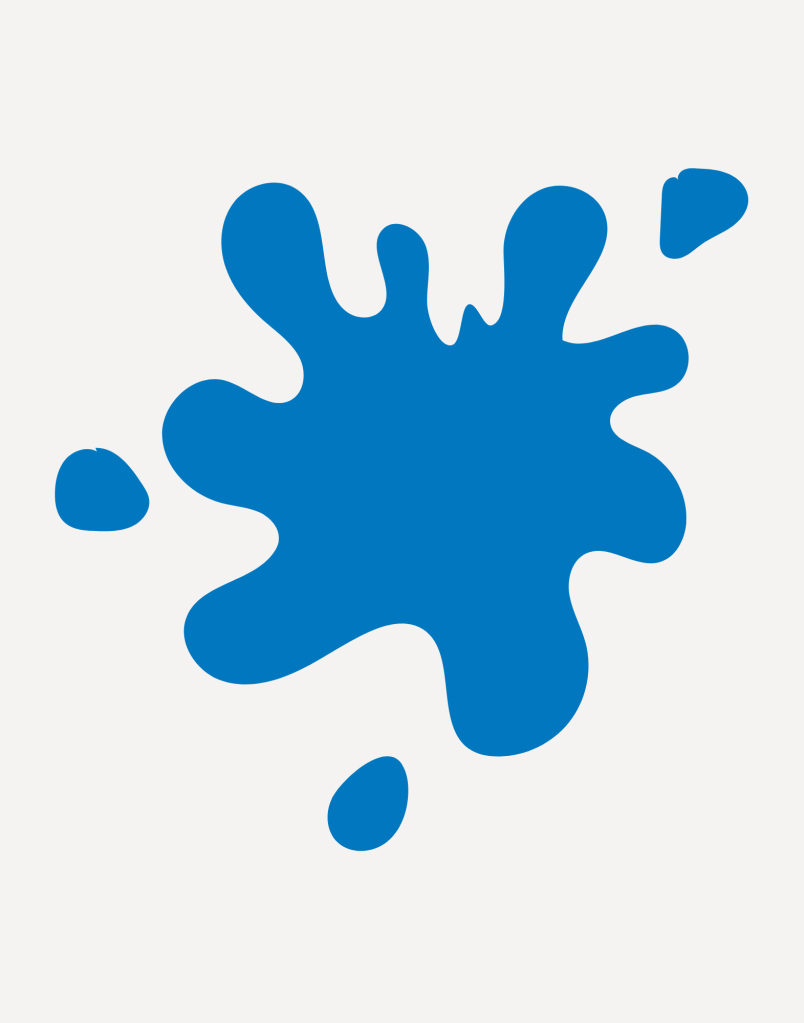
Màu xanh nước biển – sea blue (literally “the color of seawater”)
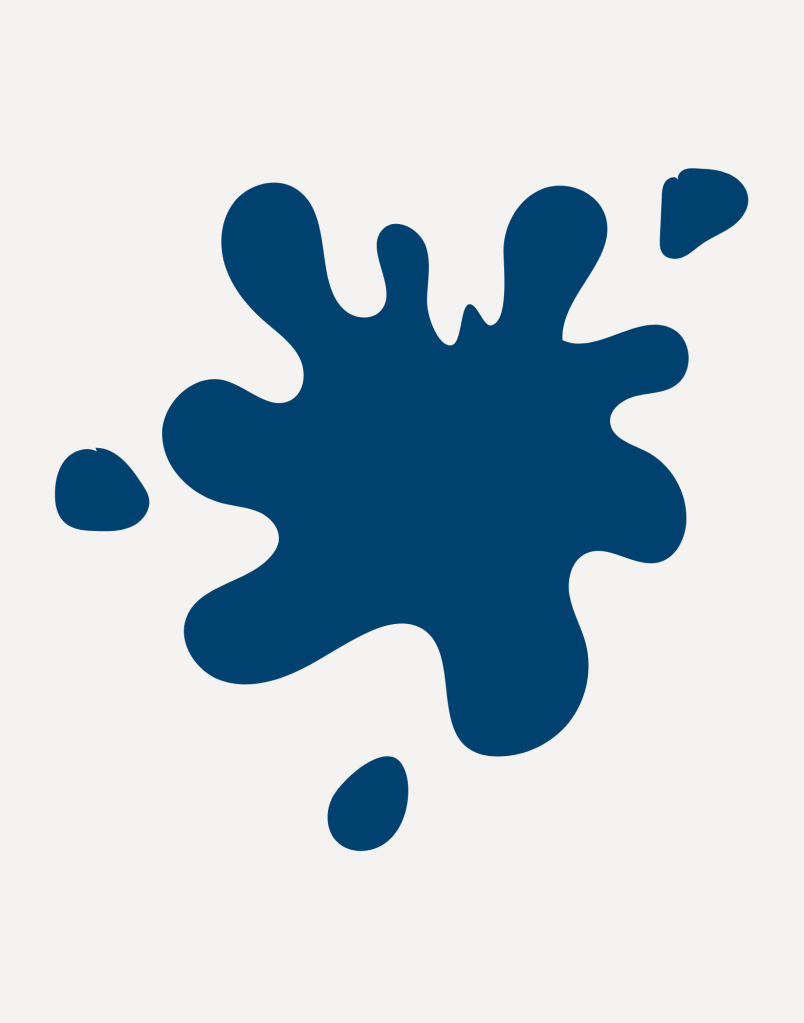
Màu xanh (đại) dương – ocean blue (literally “the color of the ocean”)
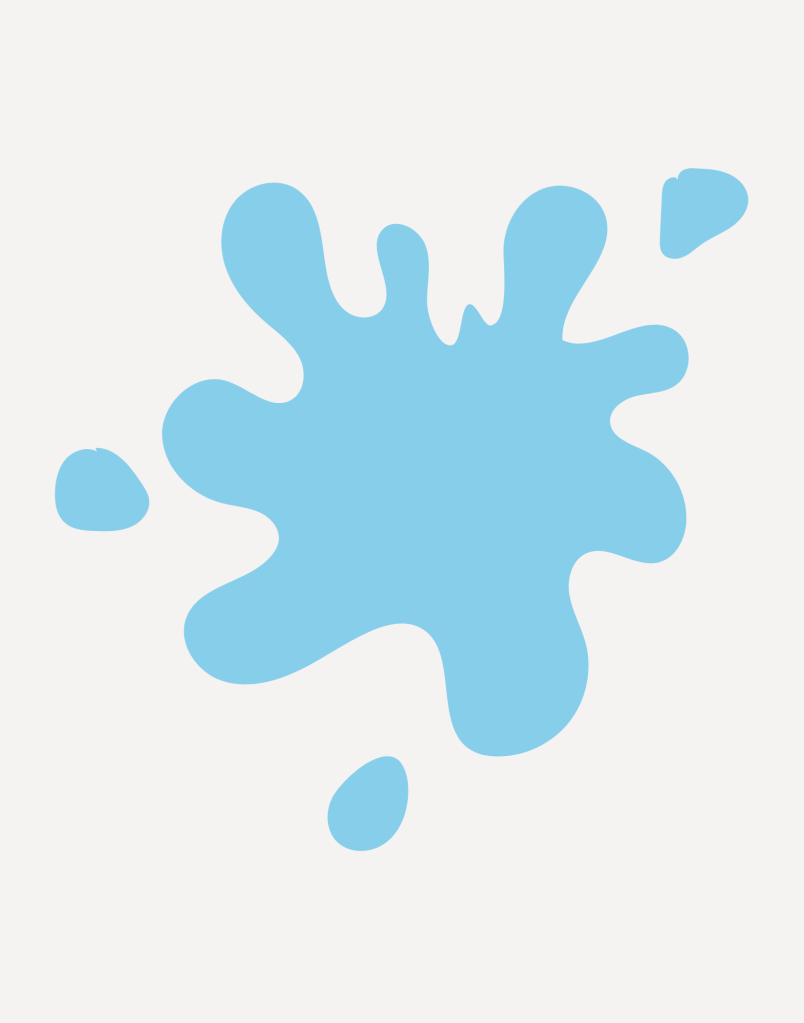
Màu xanh da trời – sky blue (literally “the color of the sky)
In Vietnamese, many colors are named after familiar objects, foods, or natural elements.

Màu cánh gián – red brown (a reddish-brown color, literally “the color of cockroach wings”)

Màu da cam – orange (literally “the color of the peel of an orange fruit”)
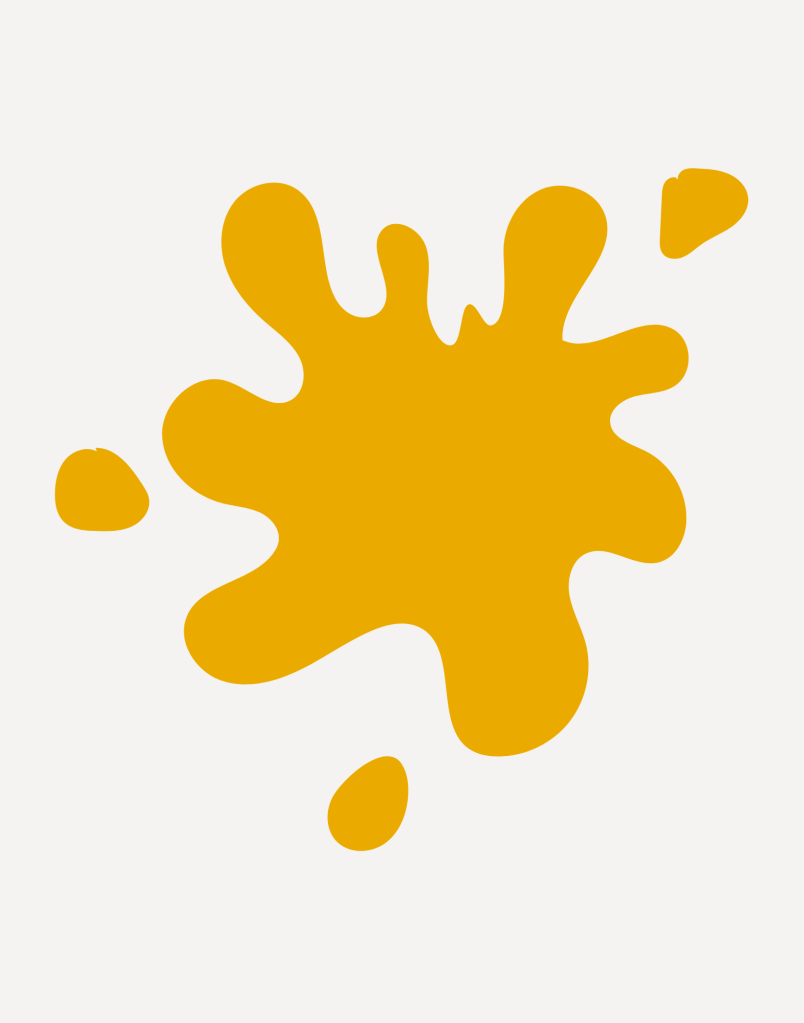
Màu vàng nghệ – a bright yellow-orange (literally “the color of fresh turmeric”)
Describing color variations
To describe a variation of a color, you can add:
đậm – dark
đỏ đậm – dark red
nhạt – light
nâu nhạt – light brown
Using colors as adjectives
When describing things with colors as adjectives, you can omit “màu”:
Mình thích uống cà phê đen. (I like drinking black coffee.)
Quần nâu không hợp với áo đỏ. (Brown pants don’t go well with red shirts.)
Anh ấy có chiếc xe đạp vàng. (He has a yellow bike.)
Expressing Colors in Sentences
In English, the verb “to be” is used to describe colors (e.g., “The bag is yellow”). However, in Vietnamese, we commonly use “có màu” (literally: “have the color”) or simply state the color without a verb.
For example:
Túi xách của cô ấy có màu vàng. (Her bag is yellow.)
Túi xách của cô ấy màu vàng. (Her bag is yellow.) (More common in everyday speech)
Điện thoại mới của mình màu xanh da trời. Mình rất thích nó. (My new phone is light blue. I really like it.)
 KemXoiLy